
You walk into a dispensary. The walls are lined with hundreds of products — flower, edibles, vapes, tinctures, topicals, capsules. A budtender greets you. They're friendly, knowledgeable-sounding, and they've already decided what to recommend before you've finished your sentence. You leave with something. Maybe it works. Often it doesn't — not quite. And you can't figure out why.

The Paradox of Too Much Choice
Psychologist Barry Schwartz coined the phrase "the paradox of choice" — the idea that more options don't produce more satisfaction. Past a certain point, they produce paralysis, anxiety, and regret. You second-guess yourself. You wonder if the thing you didn't choose would have been better. You leave less confident, not more.
Modern dispensaries are a masterclass in this paradox. The legal cannabis market has exploded. Where there used to be three or four strains under the counter, there are now hundreds of named cultivars, each with its own terpene profile, cannabinoid ratio, and claimed effect. Flower, concentrate, vape, edible, tincture, topical, capsule — and within each category, another wall of options. In 2025, flower accounts for just 36.2% of legal market sales — vapor pens (24.7%), pre-rolls (15.1%), and edibles (11.7%) have each carved out major territory, with concentrates, beverages, topicals, and capsules taking the rest.[1]
The taxonomy problem is compounded by a fundamental visibility issue. Unlike almost every other consumer product, cannabis is effectively "unshoppable" in the traditional sense — regulations force products behind counters and inside opaque packaging, preventing customers from touching, smelling, or reading labels naturally.[2] Shoppers arrive essentially blind, dependent entirely on whoever is behind the counter. And with nearly 46% of cannabis consumers reporting no preferred brand loyalty,[3] the crowded menu acts as noise rather than signal on every single visit.
The question most people walk in with is simple: what should I get? But the answer requires navigating an overwhelming taxonomy of products, effects, and consumption methods — without a map, and often with a time pressure to decide quickly.
"Past a certain point, more options don't produce better decisions. They produce anxiety. The dispensary menu has grown — but the tools to navigate it haven't."
The Budtender Problem
The person behind the counter is, more often than not, helpful and genuinely passionate about cannabis. That's not the problem. The problem is structural — and it's worth being honest about.
The stakes around that interaction are substantial. Budtenders actively influence over 50% of in-store shoppers and directly drive more than 35% of all final purchase decisions.[3] That gatekeeping power — exercised dozens of times per shift, under time pressure, with inventory targets — is the fulcrum of the entire dispensary experience.
Budtenders are retail employees. They have brands they're trained to push — brands that actively treat budtenders as a B2B sales target, incentivising their loyalty with free product samples and corporate perks.[5] They have slow-moving stock to clear. They have shift targets. They've heard a hundred conversations like yours today and have a handful of go-to recommendations that work for most people most of the time. That's not a failing — it's the nature of retail at scale.
But most people most of the time isn't you, specifically, right now.
A budtender doesn't know:
- 1 Whether you had a stressful week and need to genuinely decompress, or whether you want something light for a social evening.
- 2 Whether you've been struggling to sleep for a month, or whether sleep isn't the goal at all.
- 3 Whether you want to be creative and slightly wired, or blissfully unfocused and present.
- 4 Whether the anxiety chip in your brain gets amplified by high-THC Sativas, or whether you've built enough tolerance that it's not a concern.
- 5 What your previous experience with Indica-heavy strains felt like — whether they put you to sleep or just mellowed you out.
These aren't obscure details. They're the details that determine whether a recommendation actually fits. And without them, any recommendation is an educated guess dressed up as expertise.
A University of California, San Francisco study published in the journal Cannabis confirmed this using a secret-shopper methodology across dispensaries — finding that budtenders routinely issued specific sleep, pain, and medical recommendations citing "personal experience" as their basis, rather than chemistry or clinical data.[4] More pointedly: 57% of budtenders recommended Indica strains for sleep based on the category label alone — without referencing terpene profiles, cannabinoid ratios, or individual biochemistry.[4]

The Consumption Complexity Layer
If choosing the right strain is hard, choosing how to consume it compounds the problem. The same cultivar can produce markedly different experiences depending on how it enters your system.
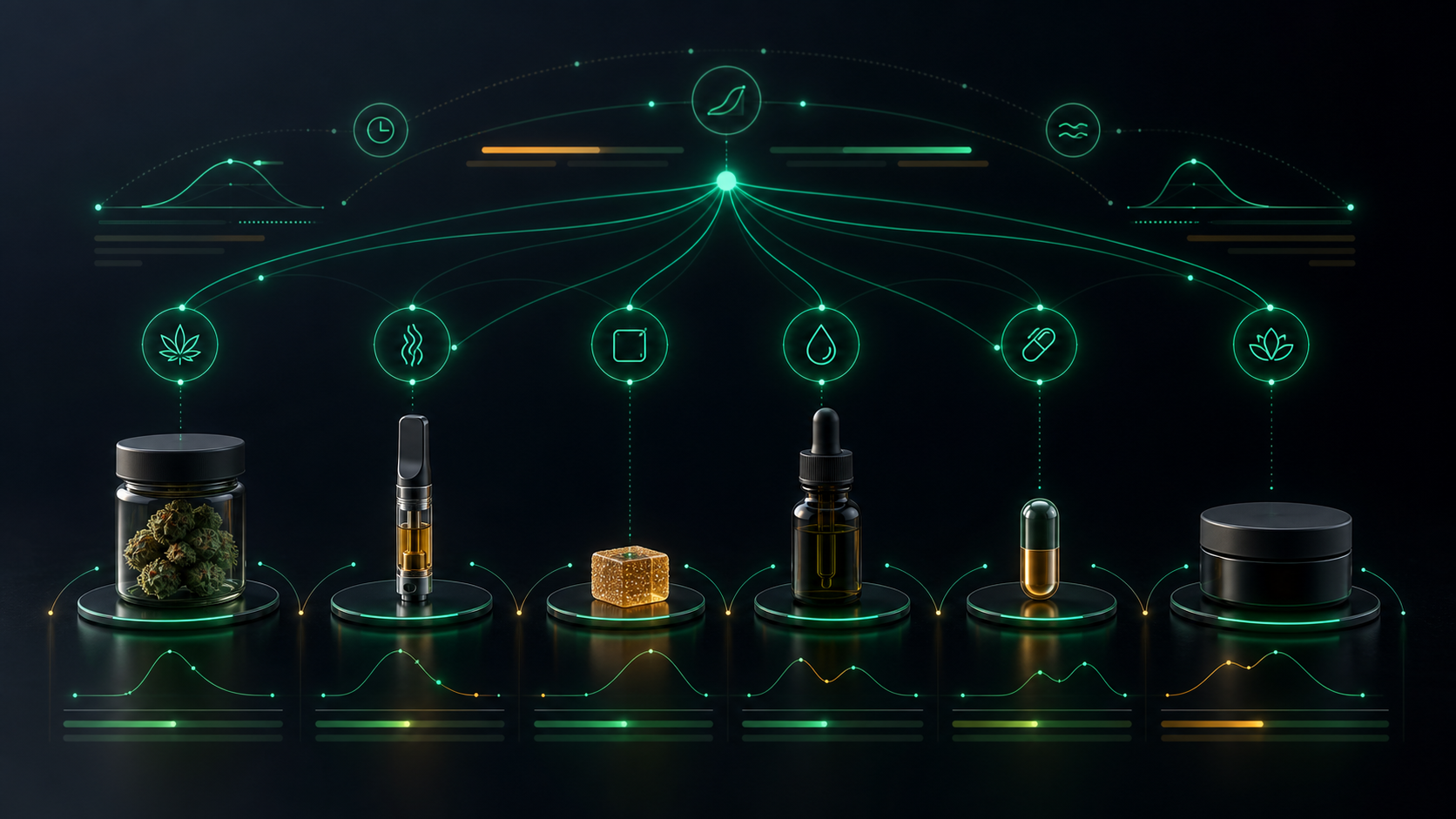
Someone who wants to wind down after work and fall asleep easily probably wants a different combination of strain and consumption method than someone who wants to spend two creative hours on a hobby. The budtender who doesn't know your evening plans can't optimise for both.
And this is before you factor in dosage — the single most common reason people have a bad experience with edibles, in particular. "Start low, go slow" is good advice. But knowing what "low" means for your metabolism, your tolerance, and the specific product you're holding? That's where generic guidance runs out.
What You Actually Need: Someone Who Starts With How You Want to Feel
Consumers are already signalling that they want this kind of pre-purchase guidance. Research from Flowhub finds that 7 in 10 cannabis consumers now view digital menus, kiosks, and online curation tools as essential to their shopping experience[6] — actively seeking a way to build a confident shortlist before stepping through the door.
The right recommendation always starts with the same question: how do you want to feel? Not what strain is popular this week. Not what's on the staff picks shelf. Not what moved well last quarter. What do you want, tonight, for your specific situation?
Once you have a clear picture of the desired emotional and physical state, the right strain follows from the science — not from inventory management. Terpenes like myrcene and linalool correlate with calming, sedative effects. Limonene and pinene tend toward energy and clarity. The cannabinoid ratio shapes the intensity and character of the experience. This is mappable. It's measurable. And it works the same way for everyone, adjusted for individual context.
The gap in the current dispensary experience isn't effort or expertise — it's the starting point. Good advice can only come after good questions.
Where Alfy Comes In
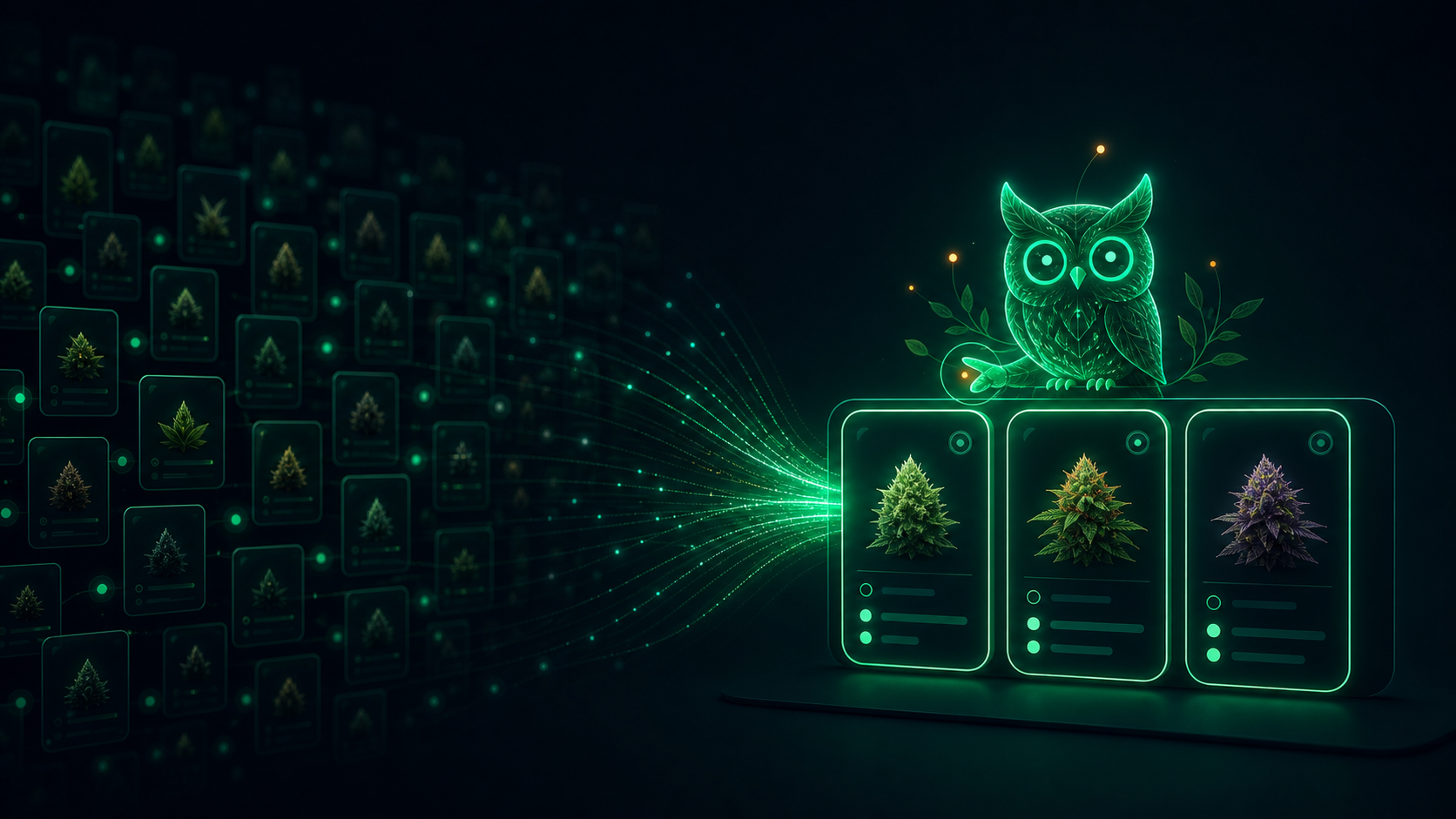
Alfy isn't a replacement for the dispensary — you still need to go somewhere to buy. But it changes who holds the knowledge before you walk through the door — and that changes everything about the conversation you have when you get there.
- Headset 2025 Cannabis Market Share Reports — Headset.io
- The Cannabis Retail Experience: Why the Product Is "Unshoppable" — Qredible Industry Panel
- Cannabis Consumer Trends: Brand Loyalty & Budtender Influence — Brightfield Group
- Budtender Recommendations in Cannabis Dispensaries: A Secret Shopper Study — University of California, San Francisco, published in Cannabis journal
- How Brands Win the Budtender: Sampling, Incentives, and the B2B Play — mg Magazine
- The Cannabis Consumer Digital Experience Report — Flowhub
Walk in knowing what you want.
Alfy narrows thousands of strains down to two or three grounded recommendations — before you ever step foot in a dispensary.
Try Alfy Free →